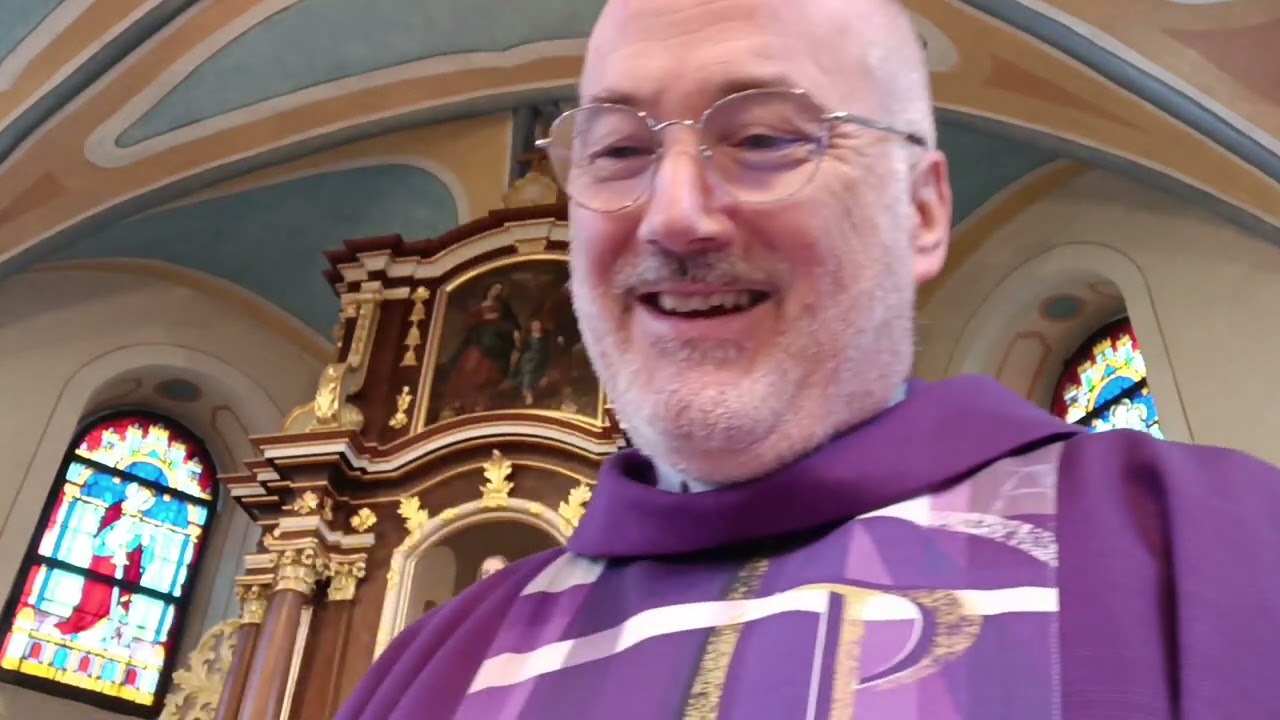
Predigten von P. Martin Löwenstein SJ
Predigt zum 2. Fastensonntag Lesejahr B 2024 (Gen/Mk, Trost)
25. Februar 2024 - St. Peter, Sinzig
Predigt
1. Einsamkeit
- Es gibt eine Einsamkeit, die ich nie erleben möchte. Wenn ich bete: "Führe uns nicht in Versuchung", dann klingt für mich mit: Führe mich nicht in diese Einsamkeit, in der ich eine Entscheidung zu tragen habe, mit der ich ganz allein bin. Bislang ist mein Gebet erhört worden. Diese letzte Einsamkeit, diese letzte Entscheidungsnot habe ich nie erlebt. Nie ging es um Leben und Tod, um diese letzte Verantwortung. Und wo ich schwere Entscheidungen zu fällen hatte, hatte ich sowohl einen guten Freund zum Rat wie die Erfahrung, im Gebet die nötige Sicherheit zu erfahren – den nötigen Trost.
- Diesen Trost dürfte Abraham schmerzlich vermisst haben. Die Erzählung schildert den langen Weg, den er gehen muss. Überzeugt, dass dieses Opfer ihm aufgetragen ist, war er aufgebrochen. Noch hat er zu organisieren. Es ist eine Gruppe mit Isaak, seinem Sohn, und zwei Jungknechten – vielleicht die beiden, die im selben Alter sind wie Isaak. Und allein mit ihnen Abraham. Allein auch mit der Last seines Auftrags. Allein vielleicht mit Zweifeln aber auch der Hoffnung, dass es irgendwie anders kommt.
- Womit kann man die Situation vergleichen? Mir kam in den Sinn, dass vor zwei Jahren, als Russland seinen Krieg auf die ganze Ukraine ausweitete, den höchsten Schutz im Land nicht der Präsident bekam, sondern seine Frau und seine Kinder. Wissend, wozu Moskau fähig ist, wollte man so verhindern, dass Präsident Selenskyj erpressbar wäre, wenn er entscheiden müsste: seine Familie zu retten oder die für das Land richtige Entscheidung zu treffen. Bei allen Beratern: Wie unendlich einsam muss ein Mensch in einer solchen Situation sein? – Herr, führ uns nicht in eine solche Versuchung!
2. Trost
- Der Trost, der uns führen kann. In seinem schwersten Stunden hat Ignatius von Loyola das erfahren. Er hat mühsam gelernt, dass die leise Stimme des Trostes es ist, die ihn aus der Einsamkeit der eigenen Verzweiflung dahin führen kann zu sehen, was der Sinn seines ganzen Lebens ist. Der Trost hat aus dem zweifelnden, verzweifelten Einsiedler einen Menschen gemacht, der in Gemeinschaft mit anderen bereit war, Menschen zu helfen.
- Warum Trost? Weil Trost Gottes Antwort auf die Einsamkeit ist. Das Wort ist beim Propheten Jesaja zentral geworden: Wie ein Mann, den seine Mutter tröstet, so tröstet Gott sein Volk (Jes 66,13). Es ist also nicht der Trost eines Kindes – das sicher auch! – sondern die Stärkung, die der Erwachsene braucht und von seiner Mutter, ihrer Güte und Weisheit bekommt. Und genau in diesem Sonn verheißt im Johannesevangelium Jesus, als er Abschied nimmt von seinen Freunden, einen parakletos, wie es im Griechischen heißt, wörtlich: einen Herbeigerufenen, einen Beistand. Consolatorübersetzen die Christen das ins Latein und von dort in viele Sprachen. Und schon die mittelalterlichen Bibelübersetzungen vor Luther haben dafür das deutsche Wort Trost verwendet (z.B. Sensenschmidt-Bibel 1476). Trauen und Vertrauen, Treue, Vertrag sind im Deutschen verwandte Wörter. Trost ist wirklich das richtige Wort!
- Das also meint Ignatius, wenn er auf den Trost vertraut, der ihm Hinweise gibt, welche Entscheidung im geistlichen, im inneren Leben mich mehr zu dem Ziel führt, zu dem ich unterwegs bin. Ignatius ist überzeugt, dass letztlich jeder Mensch diese Erfahrung machen kann: Wenn ich aufrichtig und mit der nötigen inneren Ruhe vor Gott lege, was sich mir als Alternativen anbietet, dieses zu tun oder jenes, diesen Weg zu wählen oder jenen – dann wird Gott mir durch seinen Beistand, seinen Trost zu erkennen geben, was das jeweils Bessere ist. Aufrichtig meint hier: Wenn ich nicht versuche, Gott für mich zu instrumentalisieren, durch Gott zu mehr Ansehen, Reichtum oder Macht zu kommen, wie es so oft in der Kirche geschieht. Das geht, weiß Ignatius, nicht von jetzt auf gleich. Es braucht Menschen, die mich mit ihrer Erfahrung begleiten. Es braucht Zeit, Aufmerksamkeit, Übung und immer wieder Stille: Aber es ist der Weg, wie ein jeder Christ den Beistand findet, der uns vor der Einsamkeit in der Entscheidung bewahrt.
3. Weg
- Vielleicht war Jesus selbst für die Jünger der Trost, der Parakletos und Consolator. Zumindest auf dem Weg gab es diese Momente. Jesus selbst hatte bei seiner Taufe am Jordan den Zuspruch Gottes erfahren: Du bist mein geliebtes Kind! Geh deinen Weg! Ich bin bei dir! – Die drei Jüngern, die er später mitnimmt auf den Berg, dürfen diese Erfahrung teilen. Auch für sie ist es Orientierung auf dem Weg: "Dieser ist mein geliebter Sohn; auf ihn sollt ihr hören."
- Doch es ist an der Stelle auch deutlich: So sehr Petrus sich das vielleicht wünscht – und wir mit ihm – dieser Trost ist nicht festzuhalten. Das "Hütten bauen" geht nicht. Der Beistand, der Gotte Heiliger Geist und Trost für uns ist, ist immer ein Beistand auf dem Weg. So wenig wie Gott selbst, ist Gottes Trost etwas, das wir als festen Besitz reklamieren und festhalten können. Gott ist nicht privat. Deswegen spricht Ignatius bei dem, was wir suchen sollen, auch nie von dem Besten, sondern immer nur von dem jeweils Besseren ("mehr", lateinisch: "magis").
- Doch auf dem Weg, immer neu in meinem Leben, ist Gott da. Genauer, christlich gesprochen, der Beistand und Trost, der Heilige Geist. Ich muss mich ehrlich machen, ich muss in die Stille und in das Gebet gehen. Dann ist es möglich, dieses leise Wehen des Geistes zu spüren. In der Stille des Gebetes gibt des den Unterschied von Trost und Trostlosigkeit, Gottesnähe und Gottesferne, die wie ein Wegweiser sein können.
Homily (engl)
1. loneliness
- There is a loneliness that I never want to experience. When I pray: "Lead us not into temptation", it resonates for me: Do not lead me into this loneliness in which I have to make a decision that I am all alone with.
So far, my prayer has been answered. I have never experienced this final loneliness, this final need to make a decision. It was never a matter of life and death, this final responsibility. And where I had to make difficult decisions, I had both a good friend to advise me and the experience of finding the necessary se-curity in prayer - the comfort I needed. - Abraham must have sorely missed this comfort. The story describes the long journey he has to make. Convinced that this sacrifice was entrusted to him, he had set out . He still has to organise. It is a group with Isaac, his son, and two young servants - perhaps the two who are the same age as Isaac. And Abraham alone with them. Alone with the burden of his mission. Perhaps alone with doubts, but also with the hope that things will somehow turn out differently.
- How can you compare the situation? It occurred to me that two years ago, when Russia expanded its war to the whole of Ukraine, the highest protection in the country was not given to the presi-dent, but to his wife and children. Knowing what Moscow is capable of, they wanted to prevent President Zelensky from being vulnerable to blackmail if he had to make a decision: to save his family or to make the right decision for the country. With all the advisors: How infinitely lonely must a person be in such a situation? - Lord, do not lead us into such a temptation!
How can you compare the situation? I know of situations in families where the only alternative is to report your father for the violence he uses to bully everyone. Who would want to have to make such a decision alone?
2. Consolation
- The consolation can guide us. Ignatius of Loyola experienced this in his most difficult hours. He has learnt - not the easy way - that it is the quiet voice of consolation that can lead him out of the loneliness of his own despair to see what the meaning of his whole life is. Consolation turned the doubting, desperate hermit into a person who was prepared to help people in community with others.
- Why consolation? Because comforting with consolation is God's answer to loneliness. The word has become central to the prophet Isaiah: "As a man whom his mother comforts, so God comforts his people" (Is 66,13). So it is not the comfort of a child - surely that too! - but the strengthening that the adult needs and receives from his mother, her goodness and wisdom.
- And it is precisely in this comfort that Jesus promises as the parakletos, as it is called in Greek in the Gospel of John, as he bids farewell to his friends, literally: an Advocate, or a Counselor. Christians translated parakletos into Latin as consolator and from there into many languages. But is at the same time the word for the comfort Isaiah spoke about.
- And this is what Ignatius means when he trusts in the comfort or consolation that gives him clues as to which decision in my spiritual, inner life will lead me closer to the goal I am travelling towards. Ignatius is convinced that ultimately everyone can have this experi-ence: If I sincerely and with the necessary inner calm place before God the alternatives that present themselves to me - to do this or that, to choose this path or that - then God will, through his support and consolation, make me realise what is better in each case.
- Sincere means here: When I don't try to instrumentalise God for myself, to gain more prestige, wealth or power through God, as so often happens in the church.
- By the necessary inner peace, we mean that those who are not trained to orientate themselves in silence - as if following a golden ray upwards - will find it difficult to find the inner peace they need to make a decision and pray.
- Ignatius knows that this cannot be done immediately. It needs people to accompany me with their experience. It takes time, attention, practice and repeated silence: but it is the way in which every Christian finds the support that saves us from loneliness in the decision.
3. The way
- Perhaps Jesus himself was the consolation, the Paraclete and Consoler for the disciples. At least there were these moments along the way. Jesus himself had experienced God's encouragement at his baptism in the Jordan: You are my beloved child! Go your way! I am with you! - The three disciples, whom he later takes up the mountain with him, are allowed to share this experience. For them, too, it is orientation on the way: "This is my beloved Son; listen to him."
- But it is also clear from this passage: as much as Peter might wish for it - and we with him - this consolation cannot be held on to. The "building of huts" does not work. The counsellor, who is God's Holy Spirit and consolation for us, is always a counsellor on the way. Just like God himself, God's consolation or comfort is not something that we can not claim and hold on to as a permanent possession. God is not private.
- That is why Ignatius never speaks of what we should seek as the best, but always only of what is better ("more", Latin: "magis"). But along the way, always anew in my life, God is there. More precisely, in Christian terms, the support and comfort of the Holy Spirit.
I for my part have to be honest, I have to go into silence and prayer. Then it is possible to feel this quiet blowing of the spirit. In the silence of prayer, there is a difference between consolation and desolation, closeness to God and distance from God, which can be like a sign-post.
Fürbitten/Petitions
P: Als Kirche Jesu Christi beten wir:
V: Stärke alle, die unter Alternativen auswählen müssen und weitreichende Entscheidungen zu fällen haben. – Christus, höre uns.
A: Christus, erhöre uns.
V: Führe alle, die sich in Gebet und Stille für die Bewegungen des Heiligen Geistes öffnen, dem Tröster und Begleiter. – Christus, höre uns.
A: Christus, erhöre uns.
V: Gib allen Geduld, die im Gebet Zeiten der Trockenheit erleben und die voll Sehnsucht nach dem Beistand des Heiligen Geistes sind. – Christus, höre uns.
A: Christus, erhöre uns.
V: Stehe dem Volk der Ukraine bei, das seit zehn Jahren einen grausamen Krieg ertragen muss, der seit nun schon zwei Jahre auch das ganze Land mit Gewalt überzieht. – Christus, höre uns.
A: Christus, erhöre uns.
V: Gib Weisheit denen, bei denen Verantwortung für Gerechtigkeit und Frieden liegt, weil sie in Politik, Wirtschaft, Medien oder in Sozialen Netzwerken durch ihr Sprechen und Tun Einfluss auf andere haben. – Christus, höre uns.
A: Christus, erhöre uns.
V: Nimm unsere Verstorben auf in die Wohnungen, die du uns beim Vater bereitet hast. Besonders bitten wir für N. . – Christus, höre uns.
A: Christus, erhöre uns.
P: Du bist der Gesalbte und Sohn des Vaters, in der Gemeinschaft mit dir sind wir Kinder des einen Gottes in der Gemeinschaft des Heiligen Geistes.
A:Amen
---------------
P: We pray to God, who is with us human beings:
V: Strengthen all who have to choose among alternatives
and all who have to make far-reaching decisions. - To God we pray.
V: Help that in situations of injustice and violence,
young people and children
are not burdened with naming the injustice
and exposing the violence. - To God we pray.
V: Guide all those
who open themselves in prayer and silence
to the movements of the Holy Spirit,
the Comforter and Companion. - To God we pray.
V: Grant patience to all
who experience times of dryness in prayer
and who are full of longing
for the help of the Holy Spirit. - To God we pray.
V: Give us the attention to see
when we are called to help young people
recognize in their decisions
whereto your comfort and assistance
wants to lead them. - To God we pray.
V: Help the people of Ukraine,
who for ten years now have had to endure a cruel war,
which for two years now has also covered
the whole country with violence. - We pray to God.
V: Give wisdom to those
who are responsible for justice and peace
because they influence others
through their words and actions
in politics, business, the media
or their posts on social networks. - We pray to God.
P: You are gracious and merciful, you are with us today and always.
A: Amen